This is default featured slide 1 title

Go to Blogger edit html and find these sentences.Now replace these sentences with your own descriptions.This theme is Bloggerized by Lasantha Bandara - Premiumbloggertemplates.com.

This is default featured slide 2 title

Go to Blogger edit html and find these sentences.Now replace these sentences with your own descriptions.This theme is Bloggerized by Lasantha Bandara - Premiumbloggertemplates.com.

This is default featured slide 3 title

Go to Blogger edit html and find these sentences.Now replace these sentences with your own descriptions.This theme is Bloggerized by Lasantha Bandara - Premiumbloggertemplates.com.

This is default featured slide 4 title

Go to Blogger edit html and find these sentences.Now replace these sentences with your own descriptions.This theme is Bloggerized by Lasantha Bandara - Premiumbloggertemplates.com.

This is default featured slide 5 title

Go to Blogger edit html and find these sentences.Now replace these sentences with your own descriptions.This theme is Bloggerized by Lasantha Bandara - Premiumbloggertemplates.com.

Rabu, 22 April 2015

Ebook Free Antique Maps 2015 Calendar

Ebook Free Antique Maps 2015 Calendar

Well in fact to review the book it's not only when you are in the college. Book is your buddy for life. It will not betray you. Additionally, when you locate Antique Maps 2015 Calendar as the book to check out, It will not make you really feel bored. Many individuals in this globe truly enjoy to check out the book that is written by this writer, as exactly what this book is. So, when you really wish to get an excellent new point, you can aim to be one part of those people.

Antique Maps 2015 Calendar

Antique Maps 2015 Calendar


Antique Maps 2015 Calendar


Ebook Free Antique Maps 2015 Calendar

After awaiting some minutes, lastly we could present Antique Maps 2015 Calendar in this site. This is one of the books that mostly most waited and desired. Spending more times to wait for this publication will certainly not be matter. You will also discover properly to verify the amount of individuals speak about this publication. After the introducing, this publication can be located in lots of sources.

Well really to read guide it's not just when you remain in the college. Book is your best friend forever. It will not betray you. Additionally, when you discover Antique Maps 2015 Calendar as the book to read, It will certainly not make you feel bored. Many individuals in this globe really like to check out guide that is written by this writer, as just what this publication is. So, when you truly wish to get a fantastic new point, you could try to be one part of those individuals.

By getting the Antique Maps 2015 Calendar in soft data, as chatted previously, many benefits can be gotten. Besides, as just what you understand, this publication provides intriguing declaration that makes people curious to review it. When you choose to read this publication, you could start to understand that publication will constantly offer good things. This publication is really basic as well as provides huge results.

To check out Antique Maps 2015 Calendar, you could refrain from doing challenging ways. In this era, the given on-line book is below. Seeing this web page ends up being the starter for you to discover this publication. Why? We provide this sort of publication in the listing, among the thousands of book collections to find. In this web page, you will discover the web link of this publication to download and install. You could follow up the book because link. So, when you actually require this book immediately, follow up exactly what we have actually informed for you right here.

Antique Maps 2015 Calendar

Product details

Calendar

Publisher: Pomegranate; Wal edition (July 15, 2014)

Language: English

ISBN-10: 0764966804

ISBN-13: 978-0764966804

Product Dimensions:

12 x 0.2 x 13 inches

Shipping Weight: 10.4 ounces

Average Customer Review:

5.0 out of 5 stars

3 customer reviews

Amazon Best Sellers Rank:

#1,857,002 in Books (See Top 100 in Books)

Fun to post over the toilet for something interesting to study while in the bathroom... :) I use this one upstairs in the bathroom and the more artsy "2015 Antique Maps Wall Calendar" with the blue cover downstairs on the fridge. Love the artwork and the mini-ancient world odyssey you can go on in your own imagination just by studying the maps. Hubby loves them, too!

Fun calendar

Fourth year we've bought this!

Antique Maps 2015 Calendar PDF
Antique Maps 2015 Calendar EPub
Antique Maps 2015 Calendar Doc
Antique Maps 2015 Calendar iBooks
Antique Maps 2015 Calendar rtf
Antique Maps 2015 Calendar Mobipocket
Antique Maps 2015 Calendar Kindle

Antique Maps 2015 Calendar PDF

Antique Maps 2015 Calendar PDF

Antique Maps 2015 Calendar PDF

Minggu, 22 Maret 2015

Download PDF Military History: The Definitive Visual Guide to the Objects of Warfare

Download PDF Military History: The Definitive Visual Guide to the Objects of Warfare

However, the presence of this book truly heals that you need to change that mind. Not all finest publications make use of the challenging perception to take. Thus, you should be so preferable to conquer the existence of the book to get all finest. This term connects to the web content of this publication. Also it features one of the most preferred topic to discuss; the visibility of language as well as words that are blended with the history of the author will really come correctly

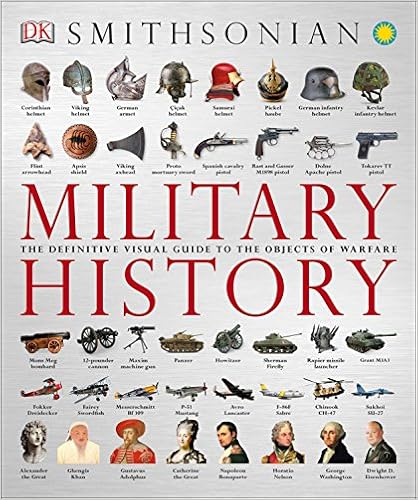
Military History: The Definitive Visual Guide to the Objects of Warfare

Military History: The Definitive Visual Guide to the Objects of Warfare


Military History: The Definitive Visual Guide to the Objects of Warfare


Download PDF Military History: The Definitive Visual Guide to the Objects of Warfare

This is your definitely time ahead over as well as have certain practice. Reviewing as one the leisure activity to do can be done as behavior. Even you may not be able to review each day, you option to choose checking out a publication to come with in leisure is right sufficient. There are not all individuals have this way. Numerous likewise believe that analysis will be so uninteresting.

When initially opening this book to check out, also in soft data system, you will see just how the book is created. From the cove we will certainly additionally find that the author is actually wonderful in making the viewers feel attracted to read more and much more. Finishing one page will certainly lead you to check out next web page, and even more. This is why Military History: The Definitive Visual Guide To The Objects Of Warfare has several fans. This is just what the writer clarifies to the visitors and also says the definition

When you have different methods to get over the presence of this book, it will approximately you. However, you have to pick which one that will provide the short time to supply this publication. This website turns into one to advise since we constantly provide the resources and also lists of the books from several nations entire the world.

Various other reasons are that this book is written by a motivating writer that has professionalism to create as well as make a publication. Nonetheless, the item is straightforward however purposeful. It doesn't utilize the hard as well as difficult words to understand. The web content that is provided is actually purposeful. You could take some exceptional factors of reading Military History: The Definitive Visual Guide To The Objects Of Warfare when you have actually started reviewing his publication sensibly.

Military History: The Definitive Visual Guide to the Objects of Warfare

Review

Praise for the hardcover: "The next best thing to going to a museum to see these items for yourself." – Armchair General Magazine

Read more

About the Author

DK was founded in London in 1974 and is now the world's leading illustrated reference publisher and part of Penguin Random House, formed on July 1, 2013. DK publishes highly visual, photographic nonfiction for adults and children. DK produces content for consumers in over 87 countries and in 62 languages, with offices in Delhi, London, Melbourne, Munich, New York, and Toronto. DK's aim is to inform, enrich, and entertain readers of all ages, and everything DK publishes, whether print or digital, embodies the unique DK design approach. DK brings unrivalled clarity to a wide range of topics with a unique combination of words and pictures, put together to spectacular effect. We have a reputation for innovation in design for both print and digital products.   Our adult range spans travel, including the award-winning DK Eyewitness Travel Guides, history, science, nature, sport, gardening, cookery, and parenting. DK’s extensive children’s list showcases a fantastic store of information for children, toddlers, and babies. DK covers everything from animals and the human body, to homework help and craft activities, together with an impressive list of licensing titles, including the bestselling LEGO® books. DK acts as the parent company for Alpha Books, publisher of the Idiot's Guides series and Prima Games, video gaming publishers, as well as the award-winning travel publisher, Rough Guides.

Read more

Product details

Paperback: 448 pages

Publisher: DK; Reprint edition (August 4, 2015)

Language: English

ISBN-10: 1465436081

ISBN-13: 978-1465436085

Product Dimensions:

8.4 x 1.1 x 10.1 inches

Shipping Weight: 3.3 pounds (View shipping rates and policies)

Average Customer Review:

4.8 out of 5 stars

93 customer reviews

Amazon Best Sellers Rank:

#36,943 in Books (See Top 100 in Books)

I liked the book for what it is. If you want to learn details of various military actions, wars, or insight into leaders and power struggles, this 8th not the book. This is a pictorial review of weapons and military gear through the ages. Also machines of war such as ships, planes, tanks from early on and into the present. More of a browsing coffee table book than a reference book. But the pictures are very good, the book is quality and the explanations accompanying them is interesting. I enjoyed the book, and it might spark enough interest for someone to want to dig deeper into history. It is world wide not just American military items. Hope this is helpful.

My husband and I fell in love with DK (especially the Smithsonian line) during a trip to the Smithsonian museums. The books are filled with an immense amount of information which is presented in a fascinating, readable way. Of course the author couldn't include absolutely every single detail about the subject at hand, but they still did a wonderful job. The photos are gorgeous and a perfect complement to the information being presented. The books themselves have sturdy binding and stout construction.

I bought this for my husband for Christmas, along with several other military history books. He likes it. Well, our grandsons were also very interested. I bought one for brothers who are 10 and 12 and another for brothers who are 8 and 10. The reviews are Cool and Awesome!It has been my experience that if you buy a DK book, it is going to be good, with excellent pictures.

Everything you wanted to know about military history is right here. From Ancient Rome to Napoleon and from World War II to the ongoing war on terror. All the weapons and the legendary commanders from Alexander to Patton are here to be read and re read. GET THIS BOOK you won’t regret it 😊

This book is simply gorgeous to look at whether your a military history 'geek' like me, or not. The book is large in size & scope & has tons of amazing pictures of weapons, uniforms, battles etc. This book strikes just the right balance between military 'eye candy' for the novice military buff, and snippets of information/opinion about the hundreds of weapons on display for history majors like myself. Many books try and get this balance between information/entertainment and very few succeed--but this book hits the mark--it will stay in my collection for years to come.

Bought this book for Christmas present for military husband with 20+yrs in navyShould be if interest for anyone who has served in armed forces or active today or just interested in history of the military

I bought this as a present for a military history fan. I took military history classes in college so I decided to flip through it before gifting it. The graphics and content are really good. I wish I had bought one for myself!

Never met a kid who doesn't love this book.

Military History: The Definitive Visual Guide to the Objects of Warfare PDF
Military History: The Definitive Visual Guide to the Objects of Warfare EPub
Military History: The Definitive Visual Guide to the Objects of Warfare Doc
Military History: The Definitive Visual Guide to the Objects of Warfare iBooks
Military History: The Definitive Visual Guide to the Objects of Warfare rtf
Military History: The Definitive Visual Guide to the Objects of Warfare Mobipocket
Military History: The Definitive Visual Guide to the Objects of Warfare Kindle

Military History: The Definitive Visual Guide to the Objects of Warfare PDF

Military History: The Definitive Visual Guide to the Objects of Warfare PDF

Military History: The Definitive Visual Guide to the Objects of Warfare PDF

Sabtu, 21 Maret 2015

Ebook Free Lonely Planet Fast Talk Japanese (Phrasebook), by Lonely Planet

Ebook Free Lonely Planet Fast Talk Japanese (Phrasebook), by Lonely Planet

Don't bother if you do not have enough time to visit guide store as well as look for the favourite publication to review. Nowadays, the online e-book Lonely Planet Fast Talk Japanese (Phrasebook), By Lonely Planet is involving give simplicity of reading habit. You could not need to go outside to browse the publication Lonely Planet Fast Talk Japanese (Phrasebook), By Lonely Planet Searching and also downloading and install guide qualify Lonely Planet Fast Talk Japanese (Phrasebook), By Lonely Planet in this write-up will certainly offer you far better solution. Yeah, on the internet book Lonely Planet Fast Talk Japanese (Phrasebook), By Lonely Planet is a kind of digital e-book that you could get in the link download supplied.

Lonely Planet Fast Talk Japanese (Phrasebook), by Lonely Planet

Lonely Planet Fast Talk Japanese (Phrasebook), by Lonely Planet


Lonely Planet Fast Talk Japanese (Phrasebook), by Lonely Planet


Ebook Free Lonely Planet Fast Talk Japanese (Phrasebook), by Lonely Planet

Million advantages of publication can be taken all if you do not only have it as your own. It will certainly occur when you read guide, page by page, to finish. Besides, review it quite possibly could aid you to ease getting the lesson. The lesson and also advantages of the books as we states might be countless. You are possibly not aware that what you feel and do now become some parts of reading advantages of such publication formerly.

Do you require the literary works sources? Legislation or politics books, religions, or scientific researches? Well, to confirm it, juts seek the title or style that you need based on the groups supplied. Nevertheless, previous, you are below in the great internet site where we show the Lonely Planet Fast Talk Japanese (Phrasebook), By Lonely Planet as one of your sources. Also this is not as well referred to as much; you could know and understand why we really suggest you to read this adhering to publication.

Well, have you discovered the means to get the book? Searching for Lonely Planet Fast Talk Japanese (Phrasebook), By Lonely Planet in the book store will certainly be probably difficult. This is a popular book and also you could have delegated buy it, implied sold out. Have you felt bored to find over again to the book stores to recognize when the exact time to get it? Currently, see this site to obtain exactly what you require. Below, we won't be sold out. The soft file system of this book actually assists everybody to get the referred book.

Guides Lonely Planet Fast Talk Japanese (Phrasebook), By Lonely Planet, from simple to complicated one will be a very beneficial jobs that you could require to alter your life. It will certainly not offer you negative declaration unless you do not get the significance. This is definitely to do in reading an e-book to conquer the significance. Frequently, this publication entitled Lonely Planet Fast Talk Japanese (Phrasebook), By Lonely Planet is checked out because you truly similar to this kind of publication. So, you could obtain less complicated to recognize the impression as well as meaning. As soon as more to consistently remember is by reviewing this e-book Lonely Planet Fast Talk Japanese (Phrasebook), By Lonely Planet, you can fulfil hat your curiosity beginning by completing this reading publication.

Lonely Planet Fast Talk Japanese (Phrasebook), by Lonely Planet

Product details

Series: Phrasebook

Paperback: 96 pages

Publisher: Lonely Planet; 1 edition (June 19, 2018)

Language: English

ISBN-10: 9781787014701

ISBN-13: 978-1787014701

ASIN: 1787014703

Product Dimensions:

3.7 x 0.2 x 5.5 inches

Shipping Weight: 1.8 ounces (View shipping rates and policies)

Average Customer Review:

4.7 out of 5 stars

4 customer reviews

Amazon Best Sellers Rank:

#71,062 in Books (See Top 100 in Books)

It has great words and phrases for traveling and convenient compact size for its purpose with good price.

Very small and easy to carry language translator. I am happily learning Japanese phrases.

Super amazing little phrasebook!!! The small guide to Japanese phrases. Love it!!!

It's a nice cheat sheet for simple phrases and good for quickly getting around.

Lonely Planet Fast Talk Japanese (Phrasebook), by Lonely Planet PDF
Lonely Planet Fast Talk Japanese (Phrasebook), by Lonely Planet EPub
Lonely Planet Fast Talk Japanese (Phrasebook), by Lonely Planet Doc
Lonely Planet Fast Talk Japanese (Phrasebook), by Lonely Planet iBooks
Lonely Planet Fast Talk Japanese (Phrasebook), by Lonely Planet rtf
Lonely Planet Fast Talk Japanese (Phrasebook), by Lonely Planet Mobipocket
Lonely Planet Fast Talk Japanese (Phrasebook), by Lonely Planet Kindle

Lonely Planet Fast Talk Japanese (Phrasebook), by Lonely Planet PDF

Lonely Planet Fast Talk Japanese (Phrasebook), by Lonely Planet PDF

Lonely Planet Fast Talk Japanese (Phrasebook), by Lonely Planet PDF

Jumat, 20 Maret 2015

Ebook Big Hair: A Journey into the Transformation of Self

Ebook Big Hair: A Journey into the Transformation of Self

Any type of publications that you review, no matter exactly how you obtained the sentences that have actually read from the books, definitely they will certainly offer you goodness. Yet, we will show you one of referral of the book that you should check out. This Big Hair: A Journey Into The Transformation Of Self is what we surely mean. We will reveal you the reasonable reasons that you need to read this book. This publication is a sort of valuable publication composed by a seasoned author.

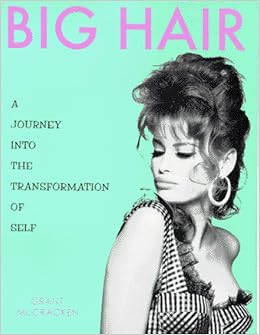
Big Hair: A Journey into the Transformation of Self

Big Hair: A Journey into the Transformation of Self


Big Hair: A Journey into the Transformation of Self


Ebook Big Hair: A Journey into the Transformation of Self

Big Hair: A Journey Into The Transformation Of Self Just how a straightforward concept by reading can improve you to be a successful individual? Reading Big Hair: A Journey Into The Transformation Of Self is a really basic activity. However, exactly how can many individuals be so lazy to review? They will choose to invest their spare time to talking or socializing. When actually, checking out Big Hair: A Journey Into The Transformation Of Self will provide you much more opportunities to be successful completed with the efforts.

By only attaching to the web as well as discover the web link that we always provide in every page, you could follow up guide to obtain. They are in the soft file programs. Now, we will present you Big Hair: A Journey Into The Transformation Of Self as an analysis publication today. We are actually sure that this book will certainly be really significant for you and also people around you. As lots of people in various other locations, they have actually taken this book as their analysis collection. So, we recommend to you to get additionally this book.

What relation to the reading publication task is from guide, you could see and recognize exactly how the rule of this life. You will certainly see just how the others will certainly gaze to others. As well as will certainly see exactly how the literary works is produced for some amusing definition. Big Hair: A Journey Into The Transformation Of Self is just one of the jobs by a person that has such sensation. Based on some truths, it will certainly ensure you to open your mind as well as think with each other regarding this subject. This publication look will assist you making much better principle of thinking.

When you have reviewed it extra pages, you will certainly know increasingly more again. Additionally when you have actually reviewed all completed. That's your time to always remember and also do just what the lesson and experience of this book provided to you. By this problem, you should understand that every book ahs various method to offer the impression to any viewers. However they will certainly be and need to be. This is what the DDD always provides you lesson regarding it.

Big Hair: A Journey into the Transformation of Self

Amazon.com Review

Most people in modern Western society are obsessed with hair: hair they have, hair they don't, hair they don't want (there), the latest to-do about the do of the latest star or starlet--and yet there have been virtually no in-depth studies of hair in this culture. McCracken, a curator of ethnology, has written an insightful study of how Westerners redefine themselves by defining and redefining their 'dos, dont's, and dyes, and the fetishistic fascination with hair styles of the rich and famous. Although written primarily about women's hair, and in particular, blond hair, my entire household--men and women alike--learned a great deal from the in-depth analyses of these dead strands of protein extruding from tiny pores on our heads which nonetheless have extraordinary power in determining status and even wealth. Recommended.

Read more

Review

An in-depth investigation into the cultural mores of our time.... I found this book brilliantly illuminating. (Ed. Note: Don't snicker: as you will find after reading this book, Vidal Sassoon's role in Western culture is far more important than you might think). -- Vidal Sassoon

Read more

Product details

Paperback: 218 pages

Publisher: Overlook Books; 1st edition (May 1, 1996)

Language: English

ISBN-10: 0879516577

ISBN-13: 978-0879516574

Product Dimensions:

7.2 x 0.5 x 9 inches

Shipping Weight: 1.2 pounds (View shipping rates and policies)

Average Customer Review:

3.7 out of 5 stars

4 customer reviews

Amazon Best Sellers Rank:

#977,254 in Books (See Top 100 in Books)

Big Hair is a playful ethnography of women's hair that manages to be simultaneously fun to read and deeply insightful. Grant McCracken, anthropologist of consumer culture, finds that deep ideas are hidden within a subject that is ordinarily presumed to be superficial: Women's attention to the appearance of their hair, and the guidance they receive from hairdressers in salons.McCracken is particularly perceptive in his assessment of the role of hairdressers, who are typically dismissed as vain and shallow. McCracken shows how hairdressers serve as a form of ritual guide for women as they undergo deep transformations of identity.Big Hair is an example of a genuine ethnographic work into an aspect of our own commercial culture. It doesn't fall prey to the dismissive reflex shown by many academics who presume that contemporary American culture is inauthentic and beneath their attention.Reading this book in the 21st century, some of the cultural references are a bit dated, but the fundamental insights of the role of hair, and hairdressers, remain vital. Consultants and market researchers especially should pay attention to McCracken's appreciative observations about the tricks used by hairdressers to create a successful consultative process for their clients, especially when clients begin the process with a misunderstanding about the directions in which their identities can authentically develop.

This is just fun... Who doesn't want to explore this? This was a pleasurable read for me, and I felt it was enlightening as well. As a hairstylist it opened my eyes a bit to the why of transformations... Good read.

This is such a fun and useful book! Truly a must for ALL hairdresser! Give you inspiring timeless tools to have!

I certainly have patience for the subject matter, even a light hearted exploration of the subject is interesting to me as a person who spends a lot of time reading about and examining the history of beauty in culture, and beauty rituals. However, this book is wildly inaccurate, claiming that mobility in women's hair in the 1950s is undesirable, if one looks at hairspray commercials, and hairstyling manuals of the time, you'll find a very different picture. It was strongly desired that hair should feel and move like hair, but with the products and technologies available at the time maintaining mobility while keeping the shape of a style was simply not possible. He seems to have read one Good Housekeeping article on the subject of hairspray and written his entire section based on that. Similarly, he over dramatizes and inaccurately portrays the life of Vidal Sassoon.He also keeps stating cultural assumptions, and his own Freudian style symbol interpretations (an outdated form, beloved of third rate academics) as objective fact. He often comes across as blatantly misogynistic (which I could forgive if he weren't so dead set on deviating from fact)There's also a weird libertarian bias that comes up way more than it should in a book about hair. Taking repeated jabs at big government is all well and good if that's what you're writing about (although I disagree with it) but it's certainly off topic in a book on hair.Just to add to the weirdness of the whole thing the author apparently believes horror hostess "Elvira" to be called "Elmira" which is also peculiar.Poorly written, poorly researched, and bad at staying on topic.

Big Hair: A Journey into the Transformation of Self PDF
Big Hair: A Journey into the Transformation of Self EPub
Big Hair: A Journey into the Transformation of Self Doc
Big Hair: A Journey into the Transformation of Self iBooks
Big Hair: A Journey into the Transformation of Self rtf
Big Hair: A Journey into the Transformation of Self Mobipocket
Big Hair: A Journey into the Transformation of Self Kindle

Big Hair: A Journey into the Transformation of Self PDF

Big Hair: A Journey into the Transformation of Self PDF

Big Hair: A Journey into the Transformation of Self PDF

Rabu, 04 Maret 2015

Download Switch: How to Change Things When Change Is Hard, by Chip Heath Dan Heath

Download Switch: How to Change Things When Change Is Hard, by Chip Heath Dan Heath

When reading the title, you can see how the author is very reliable in using the words to create sentences. It will be also the ways how the author creates the diction to influence many people. But, it's not nonsense, it is something. Something that will lead you is thought to be better. Something that will make your feel so better. And something that will give you new things. This is it, the Switch: How To Change Things When Change Is Hard, By Chip Heath Dan Heath

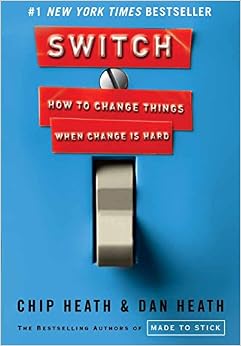
Switch: How to Change Things When Change Is Hard, by Chip Heath Dan Heath

Switch: How to Change Things When Change Is Hard, by Chip Heath Dan Heath


Switch: How to Change Things When Change Is Hard, by Chip Heath Dan Heath


Download Switch: How to Change Things When Change Is Hard, by Chip Heath Dan Heath

After so long time no see as well as locate an excellent publication, currently we are coming. Providing the excellent publications become our works each day. We will share everything about the generosity and also finest of the books. This is not only the books from this nation. The over boarded book collections are likewise various to seek for. You will not have to seek for other areas; this site is the most effective readied to locate all book collections.

If you really want to know the ways of getting this book, you could follow to read this sales letter. In this case, Switch: How To Change Things When Change Is Hard, By Chip Heath Dan Heath is among the items that we provide. There are still great deals of books from many nations, thousands of writers with amazing floor tiles. They are all provided in the links for obtaining the soft file of each publication. So it's so easy to use the outstanding features of excellences.

You might not should be doubt concerning this Switch: How To Change Things When Change Is Hard, By Chip Heath Dan Heath It is simple means to obtain this publication Switch: How To Change Things When Change Is Hard, By Chip Heath Dan Heath You can merely check out the distinguished with the link that we supply. Right here, you could buy the book Switch: How To Change Things When Change Is Hard, By Chip Heath Dan Heath by on-line. By downloading Switch: How To Change Things When Change Is Hard, By Chip Heath Dan Heath, you could find the soft data of this book. This is the exact time for you to start reading. Even this is not published book Switch: How To Change Things When Change Is Hard, By Chip Heath Dan Heath; it will exactly offer more benefits. Why? You might not bring the printed publication Switch: How To Change Things When Change Is Hard, By Chip Heath Dan Heath or stack the book in your property or the office.

You should begin caring analysis. Also you will not have the ability to spend guide for all day, you can likewise spend couple of times in a day for some times. It's not type of strong activities. You can take pleasure in checking out Switch: How To Change Things When Change Is Hard, By Chip Heath Dan Heath everywhere you really have wish. Why? The given soft file of this publication will alleviate you in obtaining the significance. Yeah, get the book right here from the web link that we share.

Switch: How to Change Things When Change Is Hard, by Chip Heath Dan Heath

Amazon.com Review

Chip Heath and Dan Heath on Switch: How to Change Things When Change Is Hard "Change is hard." "People hate change." Those were two of the most common quotes we heard when we began to study change. But it occurred to us that if people hate change, they have a funny way of showing it. Every iPhone sold serves as counter-evidence. So does every text message sent, every corporate merger finalized, every aluminum can recycled. And we haven’t even mentioned the biggest changes: Getting married. Having kids. (If people hate change, then having a kid is an awfully dumb decision.) It puzzled us--why do some huge changes, like marriage, come joyously, while some trivial changes, like submitting an expense report on time, meet fierce resistance? We found the answer in the research of some brilliant psychologists who’d discovered that people have two separate “systems” in their brains—a rational system and an emotional system. The rational system is a thoughtful, logical planner. The emotional system is, well, emotional—and impulsive and instinctual. When these two systems are in alignment, change can come quickly and easily (as when a dreamy-eyed couple gets married). When they’re not, change can be grueling (as anyone who has struggled with a diet can attest). In those situations where change is hard, is it possible to align the two systems? Is it possible to overcome our internal "schizophrenia" about change? We believe it is. In our research, we studied people trying to make difficult changes: People fighting to lose weight and keep it off. Managers trying to overhaul an entrenched bureaucracy. Activists combatting seemingly intractable problems such as child malnutrition. They succeeded--and, to our surprise, we found striking similarities in the strategies they used. They seemed to share a similar game plan. We wanted, in Switch, to make that game plan available to everyone, in hopes that we could show people how to make the hard changes in life a little bit easier. --Chip and Dan Heath (Photo © Amy Surdacki)

Read more

From Publishers Weekly

The Heath brothers (coauthors of Made to Stick) address motivating employees, family members, and ourselves in their analysis of why we too often fear change. Change is not inherently frightening, but our ability to alter our habits can be complicated by the disjunction between our rational and irrational minds: the self that wants to be swimsuit-season ready and the self that acquiesces to another slice of cake anyway. The trick is to find the balance between our powerful drives and our reason. The authors' lessons are backed up by anecdotes that deal with such things as new methods used to reform abusive parents, the revitalization of a dying South Dakota town, and the rebranding of megastore Target. Through these lively examples, the Heaths speak energetically and encouragingly on how to modify our behaviors and businesses. This clever discussion is an entertaining and educational must-read for executives and for ordinary citizens looking to get out of a rut. (Mar.) Copyright © Reed Business Information, a division of Reed Elsevier Inc. All rights reserved.

Read more

See all Editorial Reviews

Product details

Hardcover: 305 pages

Publisher: Crown Business; 1st edition (February 16, 2010)

Language: English

ISBN-10: 0385528752

ISBN-13: 978-0385528757

Product Dimensions:

5.7 x 1 x 8.4 inches

Shipping Weight: 1 pounds (View shipping rates and policies)

Average Customer Review:

4.7 out of 5 stars

995 customer reviews

Amazon Best Sellers Rank:

#1,190 in Books (See Top 100 in Books)

I am by no means a big fan of "business books". Most feel like they're thrown together quickly and read like dirge. I was pleasantly surprised by Switch -- which both reads easily and is absolutely relevant to the problems we all face in our work (and personal) lives. It breaks down the process of change into three easily-remembered and compelling constructs, and gives lots of practical examples for each construct. I found myself incorporating the concepts from Switch into my daily activities immediately, and my zeal for the model hasn't diminished over the past couple of months (the typical half-life of a business book is days in my experience).If you deal with change in any aspect of your life -- this is an excellent book. If you think you *don't* deal with change -- you're probably not paying attention!

Switch is a book about managing change by the Heath brothers (Chip and Dan). Chip is a professor at the Graduate School of Business at Stanford University and Dan is a Senior Fellow at Duke University' Social Entrepreneurship center. The two have teamed up before -- in 2007 they released their critically acclaimed Made to Stick: Why Some Ideas Survive and Others Die. This latest effort focuses less on the stickiness of the idea and more on the change process itself. What should a change agent do to implement lasting change in a hard-headed organization that desperately needs it?The book is organized into eleven chapters in three parts: Part 1, Direct the Rider; Part 2, Motivate the Elephant; and Part 3, Shape the Path. The titles come from a vivid metaphor by University of Virginia psychologist Jonathan Haidt. In his book, The Happiness Hypothesis, Haidt likens a person to a rider on an elephant. The rider is the rational side of a person: the part that tells him to eat better, exercise more, and stop procrastinating, for example. The elephant is the emotional side that doesn't want to work to lose weight or exercise and would rather stay put; let's say willpower vs. won't-power; but why should that be? Whatever is autonomous and ingrained by habit belongs to the elephant. The rider is theoretically in control, but it is exhausting to continually tug on the reins and direct the stubborn elephant. Eventually the rider relents and the elephant goes back to doing what he's always done. Sound familiar?Before going much farther, you should know that two things separate Switch from so many other glib books about change: first, the book has a very solid psychological basis. Despite its accessible style, scores of major psychological findings and studies are reported and undergird the book's practical formulae for change. Second, Switch is not a self-help book. I have no doubt that the book could be used in this way, but it is really a book about how to change things. It is primarily directed toward organizational change, though its principles are much broader. And there are many surprises.The first big surprise occurs in the very first chapter."We know what you're thinking -- people resist change. But it's not quite that easy. Babies are born every day to parents who, inexplicably, welcome that change. Yet people don't resist this massive change -- they volunteer for it. In our lives we embrace lots of big changes. So there are hard changes and there are easy changes. What distinguishes one from the other?"And the surprises keep coming. Like the two researchers who dramatically and permanently got folks to reduce their saturated fat intake. Or the doctor who saved over 100,000 lives and counting in American hospitals on schedule (18 months) by getting thousands of doctors and organizations to change their practices. Or the American who went to Vietnam and changed the face of malnutrition. Or the student who saved an endangered species in a Caribbean country that didn't give two hoots about it.What do all these stories have in common? For one, none of these change agents had the sufficient budget or authority to succeed; yet, they did. How? Every one of them gave clear rational direction to the rider by finding the bright spots, scripting the critical moves, and clearly pointing to the end goal. All of them motivated the elephant by emotionally connecting with it, and they shrunk the apparent change by carefully communicating progress. They refused to underestimate their people. Instead they provided them with a newfound identity that let them to grow into the challenge. But there was more.As the authors note, many times what looks like resistance is really confusion or even the result of misaligned incentives. That's why the path needs to be shaped by making manageable changes to the environment, building sound habits, rallying the herd, and reinforcing the new habit until it becomes a way of life.Well, maybe that sounds like a lot of work. I think it is. But speaking from firsthand experience, it will be a labor of love. And if your heart is not in the change and you do not think you can derive reward from the process, perhaps you are selling yourself short -- or, maybe you're the wrong person to lead the change and you should stop kidding yourself. And perhaps that is what I like most about this book. It does not promise a panacea. It tells it like it is without the jingoism that has become the substance of many change management essays. If you are leading organizational change, the book will provide a solid prescription for achieving lasting results because Switch uses real research, reports real experiences, and provides real guidance. Here, my recommendation is enthusiastic.

Change is hard. Any change. Everywhere. In business, in personal life."Switch" is a blueprint to change. Any change. In any environment. The book is condensed wisdom on how to change. It's deeply rooted in psychology, yet written in a simple, effective language so anybody could understand and apply it."Switch" gives you not only theory but also real life examples of people changing when change is hard.If you want to change something in your life - the "Switch" is your ultimate guide.

Ever want to loose weight and you’re like me you love chocolate chip cookies? You love them so much that your 4 year old calls you the cookie monster.Are you responsible for some change in your company but don’t really have the power to make that change? Maybe you’re in charge but the entrenched ethic/patterns are totally contrary to the change that needs to be made?This is the book for you.Chip and Dan Heath explore how many organizations made the Rider (our thinking brain) and the Elephant (our feeling brain) both adopt a change. You’ll see this 2 brain thinking explored in other books like Thinking, Fast and Slow.In Switch Chip and Dan assert that our Rider is going to generally go where the Elephant wants to. With great effort it can overpower the Elephant for a short time (like when I swear off cookies) but eventually the much more powerful Elephant will win as the Rider gets tired.Switch doesn’t claim to give you all the answers to make effective change at your organization, it does give you lots of great stories and examples of how others made change and then pulls out practical application you can use to help make changes in your organization.One of the best takeaways is to make change easy. Don’t give a big overarching change policy. Give clear concise easy to carry out directions. If you’re looking to cut short term costs because you have no money maybe that direction is “We’ll always choose the cheapest option even if the long term cost is more”.With that direction all purchasers have a clear direction when making any purchasing decision.There are many more great takeaways in Switch and I highly recommend you read it.

Switch: How to Change Things When Change Is Hard, by Chip Heath Dan Heath PDF
Switch: How to Change Things When Change Is Hard, by Chip Heath Dan Heath EPub
Switch: How to Change Things When Change Is Hard, by Chip Heath Dan Heath Doc
Switch: How to Change Things When Change Is Hard, by Chip Heath Dan Heath iBooks
Switch: How to Change Things When Change Is Hard, by Chip Heath Dan Heath rtf
Switch: How to Change Things When Change Is Hard, by Chip Heath Dan Heath Mobipocket
Switch: How to Change Things When Change Is Hard, by Chip Heath Dan Heath Kindle

Switch: How to Change Things When Change Is Hard, by Chip Heath Dan Heath PDF

Switch: How to Change Things When Change Is Hard, by Chip Heath Dan Heath PDF

Switch: How to Change Things When Change Is Hard, by Chip Heath Dan Heath PDF

Minggu, 01 Maret 2015

Free PDF

Free PDF

Guide that is presented to read in this time will certainly be the As we have offered and also presented, you could worry about the cover of this book at first. Considering the cove will make you really feel interested or not in this publication. Yet, lots of people have proved that this publication has been very interesting to read, even looking from only the book cover. The principle of making the cover as well as how the writer gives the title are very fantastic.


Free PDF

Do you need new reference to accompany your extra time when going to home? Reviewing a publication can be a great selection. It can spare your time usefully. Besides, by reviewing book, you could improve your expertise as well as experience. It is not only the science or social understanding; lots of points can be obtained after checking out a publication.

To help you beginning to have reading practice, this is offered currently. With any luck, by using this book, it can attract you to start finding out as well as checking out behavior. When you discover a brand-new publication with interesting title as well as famous writer to check out, exactly what will you do? If you only read based on the particular style that you like, actually it is no mater. The matter is that you really do not wish to attempt reading, even only some pages of a thick book.

Furthermore, we will discuss you the book in soft documents forms. It will not interrupt you making heavy of you bag. You need only computer device or gadget. The link that our company offer in this website is readily available to click and then download this You understand, having soft data of a book to be in your device could make ease the users. So by doing this, be a great reader currently!

This becomes a complement in your preparation for much better life. It is to had to obtain the book to obtain the very best vendor or finest writer. Every book has particular to earn you feel deeply regarding the message and impact. So, when you locate this publication in this site, it's much better to obtain this publication soon. You can see exactly how a straightforward book will certainly provide effective perception for you.

Product details

File Size: 14976 KB

Print Length: 16 pages

Publisher: Capstone Press (July 1, 2012)

Publication Date: September 25, 2018

Language: Spanish

ASIN: B07DNH1TK4

P.when("jQuery", "a-popover", "ready").execute(function ($, popover) {

var $ttsPopover = $('#ttsPop');

popover.create($ttsPopover, {

"closeButton": "false",

"position": "triggerBottom",

"width": "256",

"popoverLabel": "Text-to-Speech Popover",

"closeButtonLabel": "Text-to-Speech Close Popover",

"content": '

' + "Text-To-Speech is not supported for this title." + '
'

});

});

P.when("jQuery", "a-popover", "ready").execute(function ($, popover) {

var $xrayPopover = $('#xrayPop_8E5A4F7C5A8D11E999A7C574EDCAB546');

popover.create($xrayPopover, {

"closeButton": "false",

"position": "triggerBottom",

"width": "256",

"popoverLabel": "X-Ray Popover ",

"closeButtonLabel": "X-Ray Close Popover",

"content": '

' + "X-Ray is not available for this item" + '
',

});

});

Word Wise: Not Enabled

Lending: Not Enabled

Enhanced Typesetting:

Not Enabled

P.when("jQuery", "a-popover", "ready").execute(function ($, popover) {

var $typesettingPopover = $('#typesettingPopover');

popover.create($typesettingPopover, {

"position": "triggerBottom",

"width": "256",

"content": '

' + "Enhanced typesetting improvements offer faster reading with less eye strain and beautiful page layouts, even at larger font sizes. Learn More" + '
',

"popoverLabel": "Enhanced Typesetting Popover",

"closeButtonLabel": "Enhanced Typesetting Close Popover"

});

});

Amazon Best Sellers Rank:

#210,760 Paid in Kindle Store (See Top 100 Paid in Kindle Store)

PDF
EPub
Doc
iBooks
rtf
Mobipocket
Kindle

PDF

PDF

PDF
PDF

Selasa, 24 Februari 2015

Free Ebook Three New Deals

Free Ebook Three New Deals

Really feeling tired after doing some activities in vacations will certainly get you to have relaxation for some minutes. It will additionally help you to fulfill the cost time. When you can appreciate your time for relaxation and neglect the panorama around you, it is the best time to have also reading. Yeah, reading book becomes a really perfect suggestion to do today. However, do are you really feel odd not to bring particular publication?
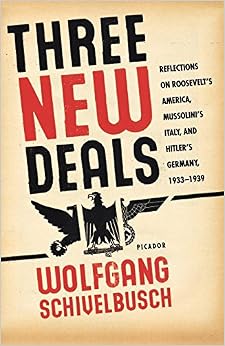
Three New Deals

Three New Deals


Three New Deals


Free Ebook Three New Deals

Do you need brand-new referral to accompany your spare time when going to house? Reading a publication can be a good option. It can spare your time usefully. Besides, by checking out publication, you could enhance your knowledge and experience. It is not just the science or social understanding; many things can be acquired after reading a book.

In some cases, checking out Three New Deals is quite boring and it will take long time beginning with getting the book and start checking out. However, in modern-day period, you could take the creating innovation by utilizing the net. By internet, you can visit this page and begin to search for the book Three New Deals that is required. Wondering this Three New Deals is the one that you require, you could go for downloading. Have you understood ways to get it?

By reading this publication, you will certainly see from the various other mindset. Yeah, open mind is one that is required when reading guide. You may also need to select just what information as well as lesson that works for you or damaging. However in fact, this Three New Deals deal you no harm. It offers not only the requirements of many individuals to live, yet also added functions that will certainly keep you to supply perfection.

After reading this publication, you will really recognize just how specifically the importance of reading books as usual. Believe again as what this Three New Deals offers you new lesson, the various other books with several styles as well as categories and also million titles will certainly also give you very same, or more than it. This is why, we always give what you need and exactly what you have to do. Many collections of guides from not only this nation, from abroad a nations worldwide are offered below. By supplying easy means in order to help you discovering the books, hopefully, checking out habit will certainly spread out quickly to other people, also.

Three New Deals

Review

“Controversial, well written, and convincing, this is historical analysis at its most invigorating.” ―Minneapolis Star-Tribune“Schivelbusch is a brilliant cultural historian . . . who brings a comparative cultural focus to the 1930s with fascinating and provocative ideas.” ―Los Angeles Times Book Review“Illuminating.” ―Bloomberg News“A feast of ideas, many of them strikingly appropriate to our own bellicose times.” ―San Francisco Chronicle on The Culture of Defeat“Fresh and provocative . . . A novel and thought-provoking book.” ―Houston Chronicle on The Culture of Defeat

Read more

About the Author

Wolfgang Schivelbusch is an independent scholar who divides his time between New York and Berlin. His books include The Railway Journey, Disenchanted Night, and Tastes of Paradise.

Read more

Product details

Paperback: 258 pages

Publisher: Picador Paper; 1st edition (November 27, 2007)

Language: English

ISBN-10: 0312427433

ISBN-13: 978-0312427436

Product Dimensions:

5.5 x 0.6 x 8.5 inches

Shipping Weight: 14.1 ounces (View shipping rates and policies)

Average Customer Review:

3.6 out of 5 stars

14 customer reviews

Amazon Best Sellers Rank:

#494,470 in Books (See Top 100 in Books)

This book, a brief work of cultural history, outlines four parallel aspects of three political systems: the American New Deal, Italian Fascism, and German Nazism. The point of "Three New Deals" is that these political systems shared core similarities in certain programmatic manifestations. The author, Wolfgang Schivelbusch, fortunately does not claim that the three systems were essentially the same. He offers, instead, a discussion of the interplay between the governed and the governors in each of these systems—how each shaped the other, in ways that can be compared and contrasted across systems. The result is a book of modest interest from which, perhaps, something more can be spun.While cultural history is interesting, my purpose is not to examine "Three New Deals" as a view on the past, but as an onramp to the future. What applicable lessons, what tools, can we learn from this look at the troubled 1930s, when, like now, liberal democracy seemed like a dying system? By lessons, I do not mean pedagogical lessons, helping us to get liberal democracy back on track, since I don’t want to get it back on track. I mean how can what worked then to build mass support for political systems be used today to the same effect? Certainly, if the New Deal is not disqualified from polite society by its parallels to true Fascism and to Nazism, there is no particular reason a fourth, future, polity with the same parallels should be disqualified.I really need a name for this political program that I am constructing. It is, of course a reactionary program—in my usual phrase, “a new thing informed by the wisdom of the past.” Generically, I refer to it as Reaction, but that is neither evocative nor adequately precise. That will not catch fire. In part, the problem is that it’s hard to name a program that is not an ideology, but rather a set of principles based on history and human nature, which does not promise utopia, or guarantee happiness or universal justice, but merely offers living within the truth, and maximum possibility for human flourishing. “Restorationism,” a related term, is too backward looking for my purposes; the past is gone, which is a key principle of mine, and anyway not all elements of any past were wholly desirable. I am struggling to come up with something good. Neo-Realism? If you have an idea, let me know.But let’s parse the book. Schivelbusch makes clear his own angle from the book’s epigraph, a quote from David Hume: “As force is always on the side of the governed, the governors have nothing to support them but opinion. It is, therefore, on opinion that the government is founded; and this maxim extends to the most despotic and the most military governments as well as to the most free and popular.” We can forgive Hume his delusion that force is “always on the side of the governed”; he lived far away from Oriental despotism and long before both the modern totalitarian state and our own Cthulhu state. But his major point is insightful—that public opinion matters to any government. (In addition to public opinion, what he called “opinion of interest,” Hume was also talking about legitimacy, or what he called “opinion of right.” They are related, but not the same.) One necessary conclusion is that the support of the public is essential for the stability of any government, and its ability to fulfil its program, and the more support, the better. This is, no doubt, why Schivelbusch chose this epigraph, for the rest of his book discusses how public opinion was shaped by the the three regimes that are the subject of his study.The critical importance of public opinion in all times and places isn’t news, of course, and has little or nothing to do with democracy. José Ortega y Gasset pointed out that force, even in the modern world, followed public opinion. Julius Caesar and Augustus both were keenly aware of the need to keep public opinion, both aristocratic and plebian, in their corner. Such examples could be multiplied endlessly through the centuries. The trick, therefore, for those in charge is how to shape and shift that public opinion, rather than being tossed about by it. Such an effort is like the martial art of aikido—if you use your opponent’s own motions, but redirect them, it is a lot easier to win than by simply trying to overwhelm one force with another. In the same way, it is easier to create channels for public opinion and thereby lead and direct the flow in the desired direction, within the limits set by the opinion itself, which will vary in time and place. How to carve those channels, in four different ways, is the topic of the rest of Three New Deals.Schivelbusch begins with “Leadership.” While Roosevelt is now, as viewed through the prism of World War II, seen as the antithesis of Hitler and Mussolini, in the early 1930s all three were perceived as charismatic leaders outside the established system, who stood apart from the traditional ruling class and built a “direct emotional connection with the masses.” “Commentators freely noted areas of convergence among the New Deal, Fascism, and National Socialism. All three were considered postliberal state-capitalist or state-socialist systems, more closely related to one another than to classic Anglo-French liberalism. Hitler, Mussolini, and Roosevelt were seen as examples of plebiscite-based leadership: autocrats who came to power via varying but thoroughly legal means.”The mechanisms for, and therefore the impact of, this emotional connection to leadership were different: Hitler used the mass rally; Roosevelt the radio, “yet both were collective experiences.” Schivelbusch points out that the perception we have from speech excerpts of Hitler simply ranting is wrong; his speeches started and ended calmly, in a deliberate structure, and were regarded at the time as incredibly effective, just like Roosevelt’s “fireside chats”—especially at making the listener feel like he was being directly addressed. Both were carefully constructed and honed for maximum impact by the men who delivered them, who had a gift for oratory. Yes, it’s difficult to compare the two, in part because radios were much more common in American homes and, obviously, radio lacked the mass drama created by Hitler’s staging and a surrounding crowd (Schivelbusch naturally cites Gustave Le Bon). “Yet in both cases, the end result was similar. The individual abandoned [himself] fully to the speaker. . . .”So now we have our first necessary element in a modern program: a charismatic leader in the same mold, that is, one having this direct emotional connection with individuals while actually addressing them en masse. Modern exemplars are thin on the ground; no Western modern politician has had any element of this charisma. Barack Obama was puffed as a great orator; we can ignore whether that’s actually true, but note without dispute, I think, that charisma does not derive from positive reception by people who already agree with you. I doubt if anybody at all was ever convinced of anything by an Obama speech; his oratory was purely designed for the faithful. And, of course, like all modern politicians, it wasn’t his oratory at all—he read, word-for-word, speeches written for him by others. I’m pretty sure it’s impossible to create a “direct emotional connection” that way. Donald Trump may be good at the rabble rousing speech, and he is more extemporaneous, but his speeches are hardly honed, and he is also preaching mostly to the choir. Trump may be charismatic, but he is far too undisciplined to be this type of leader.Arguably, the rise of such a man is more difficult than in the past, simply because collectively addressing the masses requires them to pay attention, and people have so many different ways to spend their time, and money to satisfy their tastes. This is exacerbated by the atomization of society and the destruction of intermediary institutions, which, for good and bad, can impose pressure on their members to participate collectively. It’s not clear to me that in the present dispensation any charismatic leader could get traction—say, approval by 85% of people. In any case, it seems to me such a man must spring up full grown, like Athena from the head of Zeus. We will not wake up one day with Ted Cruz or Gavin Newsom as Maximum Leader. If such a man does arrive, we will know it—again, for good or bad. For my purposes, therefore, there is nothing to do to hasten this tool for implementation of the program.Schivelbusch next turns to “Propaganda,” “the means by which charismatic leadership, circumventing intermediary social and political institutions like parliaments, parties, and interest groups, gains direct hold upon the masses.” As he points out, World War I led to the massive use of extremely aggressive propaganda by the United States government. All successful propagandists, though, start by grasping what public opinion is, along with where it is trending, and then reinforce what are perceived as desirable opinions, or “illuminate the people if those trends lead nowhere,” in the words of Joseph Goebbels that Schivelbusch quotes. While the general form of propaganda was similar, the New Deal government, unlike the Third Reich, did not have propaganda directed from a central ministry. Instead, it had coherent propaganda diffused through multiple departments, responding to direction from Roosevelt. And American propaganda relied on cooperation, which it got, from the press, sometimes helped along by pressure, rather than direct coercion, although the Nazis did not often have to use coercion either.Beyond direct narrative propaganda of the obvious sort, the role of symbols was extremely important. Schivelbusch contrasts the successful Nazi use of symbolism (in part derived from Communist use of symbols) with the insistence upon strict rationality by their Social Democratic opponents. He gives the example of how the SD failed to push the powerful design by Sergei Chakotin of the “Anti-Fascist Circle,” three downward pointing arrows. (This symbol is still used by the so-called Antifa. That’s a topic beyond today, but it is interesting that Schivelbusch notes the quote attributed to Huey Long, “When America gets Fascism it will call it Anti-Fascism.”) Not that Schivelbusch thinks the SD could have won with more skillful propaganda; his claim is that “Propaganda works best in the service of a movement that is already on the rise, and its most effective moment comes in periods of crisis and revolution, when a fading regime is losing its potency and the nation’s will is as yet undecided.” No doubt Carl Schmitt would have had much to say on this.One equivalent in New Deal America was the Blue Eagle of the NRA (not the good one, rather the “National Recovery Administration”). This was the central symbol of an extremely aggressive, though relatively brief, campaign by the Roosevelt administration to force “voluntary” price and wage controls, through identifying by display of the symbol those people who were good and those who were bad, and thereby creating a snowball of psychological compulsion. The head of the NRA, Hugh Johnson, called for social ostracism and boycotts of those not participating, though he didn’t call it a boycott. Rather, merchants not participating went out of business because “The public simply cannot tolerate non-compliance with their plan.” Thus, the Blue Eagle was a classic form of what Schivelbusch calls the “symbolism of compliance.” Its equivalent in Germany was the use of “Heil Hitler,” display of swastika flags, and so forth. Its equivalent today is “Resist” and “I’m With Her” stickers, yard posters lying that “Hate Has No Home Here,” or signs in shop windows saying “Workers of the World, Unite” or “This Business Serves Everybody.”The purpose of all 1930s propaganda, narrative or symbolic, was to create the psychology of “voluntary compulsion.” It was not a substitute for actual political programs, which were offered and repeated in detail, but were given punch by symbolism. “What captivated the public imagination was not any particular project and its chances for success but the emotional charge of how such projects were presented.”So what does this imply for my program? It implies, for one, that modern “movement” conservatives are functionally worthless. (Sorry to my friends in the conservative movement.) Ideas may have consequences, but theirs don’t, because the masses aren’t listening, and they’re not going to wake up one day, realize what they’re missing, and rush to consume journals of opinion or YouTube videos with 324 views. The conservative movement does have uses—for example, building Rod Dreher’s Benedict Option can be done through such a movement and its publications. By definition, the Benedict Option is not a mass movement (though the government, with the support of the masses, if they are not turned by an angel with a flaming sword, or a man with an AR-15, will crush the Benedict Option, as I have said before and I will shortly expand upon). But good propaganda has exactly zero traction on the intellectual Right today (though “MAGA” does have some pull). It has somewhat more traction on the Left, but, really, not much by historical standards.Perhaps, in any case, propaganda’s effect is lessened today for the same reason that charismatic leaders cannot get the focused attention of the masses, and modern symbols of compliance often feel washed out —there is a lot of competition for eyeballs. I’m not sure what an effective propaganda campaign would look like; the only ones we have today are facile ones that ask of people nothing other than costless virtue signaling. Certainly, such virtue signaling is not costless for others, like orthodox Christian bakers, and such propaganda does have a real impact on the masses, but it seems to me there is little of the visceral, or any “emotional charge,” about it. One moment a flash of contempt for the Christian, who dares deny that “Love is Love is Love” is a profound truth; the next moment it is forgotten as Netflix offers a smorgasbord of cotton candy for the brain. For any propaganda to be successful in catching the vast majority of people and pushing them in a particular direction, good symbolism or no, it would have to be tied to some focusing event, jarring people out of their lives of ease and comfort to think for themselves again. If grabbed at that moment, let’s say at the same time the charismatic leader seizes the day, then we are well on our way to rerouting public opinion through our new channels.I will also note in passing, and keep discussion for another day (sorry I keep doing that), that good propaganda requires good creative ability. In the post-war era, creative types tend to be left-wing. Certainly, artists have not historically been left-wing; this is a wholly modern phenomenon, the basis and future of which bear examination. But as I say, not today. I also note that one necessary lesson from this discussion of leadership and propaganda is how rapidly the consensus represented by public opinion can shift. Public opinion is like a counter-weighted elevator; it seems like it would take an enormous effort to shift its direction, but it is so balanced that small changes reverse it entirely, multiplying the impact of both leadership and propaganda.Up next, Schivelbusch covers “Back to the Land.” Nationalism, in the sense of a classless community of the nation; and its cousin, autarky, get a brief treatment. Of course, the community of the nation has its enemies; in America, those were the “money changers” blamed by Roosevelt (not an anti-Semitic reference) and the supposed war profiteers. The governments in all three countries explored forms of regionalism and autarkic back-to-the-soil movements, in part a reaction to economic depression and resulting unemployment in cities, in part a form of re-enchantment and retreat to a supposedly more virtuous, primordial way of life, a type of “organic authenticity.” In the United States, this led to a lot of talk, and the construction of the abortive Arthurdale planned community in West Virginia. The Germans also nattered a lot about “settlements” (Siedlungen), but those never went much of anywhere inside Germany (still, it seems to me, though Schivelbusch does not mention it, that these same concepts must have underlain the plans for German repopulation of the “new lands to the East,” after the inconvenient Untermenschen had been seen off). Schivelbusch does not see these “back to the land” movements as a failure, however—he sees them as an integral and successful element of the overall propaganda effort of both the American and German regimes.My program is not going to have any back-to-the-land component. While there is something to be said for keeping farming as a possible occupation simply for nostalgia, modern agriculture doesn’t need family farms, nor does farming offer anything that catches and channels public opinion. Neo-Realism, or whatever we are calling it, will not offer price supports to farmers. It will not allow factory farming, either, though—allowing fat people to hoover up huge quantities of cheap fried meat is antithetical to human flourishing, and while animals have no rights at all, it is our duty to treat them, to exercise our dominion over them, in a moral fashion, which factory farming does not. But the days of working the soil for any significant portion of the population are over, and there is nothing inherently more virtuous about farming than any other occupation—though, certainly, total detachment from nature is not desirable, so there will be plenty of parks, national and otherwise.Finally, Schivelbusch turns to “Public Works.” Mussolini finally gets some mention (he is mostly missing from the first three topics). Here we return to neoclassical monumentalism, which, let’s be honest, impresses everybody. You are lying if you think Le Corbusier holds a candle to, say, the Jefferson Memorial. Classic architecture is classic for a reason. “Scholars gradually recognized neoclassical monumentalism—whether of the 1930s, the Renaissance, the French Revolution, or the Napoleonic empire—for what it is: the architectural style in which the state visually manifests power and authority.” In Washington, D.C., “most of the large neoclassical buildings associated with the city today were built between 1933 and 1939.” Similar projects were undertaken elsewhere. True, there are limits to this. The monstrous proportions of buildings proposed, but never built, by Hitler and Stalin take this arc too far, becoming anti-human and enshrining the state as a false god (the Amazon series "The Man in the High Castle" portrays many of these buildings as if-built; this reality comes through clearly).But buildings are only a small part of it; a government desiring to create a new thing must offer a broad range of public works that embody a unifying philosophy and create a unifying effect. Mussolini drained the Pontine Marshes and constructed therein new cities, “three-dimensional representations of the Fascist ideals of organization, control, and the absence of urban chaos.” The struggle to tame nature gave Fascism an epic tale that fit with charismatic leadership and propaganda; a masculine battle against disorder. In America, the equivalent, with less bluster but on a grander scale, was projects like the Tennessee Valley Authority (also used to extend the reach of the federal government beyond traditional limits). The Germans had the autobahn.[Review completes as first comment.]

Schivelbusch is an excellent analyst of political culture. He compares Roosevelt's new deal with Mussolini's Fascism and Hitler's National Socialism. The book is not a smear of Roosevelt, but rather an examination of how the prevailing political ideals of rationality and organization were implemented in the three countries. There is also thoughtful analysis of the use of media, radio in the US and rallies in Europe.

This is a truly brilliant book. It highlights the fact that political and economic crises often produce similar results, specifically a centralization of state power. Some people may not like this book because it suggests similarities between Roosevelt's New Deal and Fascism. However, the point here is not to suggest Roosevelt was racist or antisemitic (a totally idiotic notion) but to focus on the much larger issue of the use of state power in a crisis. The book has important lessons for the future. The current world order is doing a very poor job is dealing with deadly threats like the global environmental crisis. In a new series of world crises there is likely to be a huge centralization of power. Albert Speer once observed that when fascism comes back, it will come back as anti-fascism. The larger issue here is totalitarianism and its potential role in the world future.

If you want to know how completely corrupt FDR was, read this book.SEE what they planned for us. Extremely well written and documented. You should read if you want to know what the New Deal meant for our folks and for their children... yeah, you and me.

This book was obviously the predecessor to Jonah Goldman's best selling 'Liberal Fascism.' This is a quick study of reviewing governmental trends in the early 20th Century in response to post-WWI problems and the Depression.My only criticism is the minimal coverage of Mussolini's corporate state that was actually the blueprint for Hitler's programs and Roosevelt's New Deal. Mainly the comparisons are between Germany and the United States.This book could have also been longer with a more in depth review of these three societies. For a more in depth analogy albeit more politically-biased review, I would recommend 'Liberal Fascism.'

This book read well and had useful information; however, it was just the tip of the iceberg. The book was simply too short. The parallels between Roosevelt, Hitler, and Mussolini are clearly made. If that was the only premise of the book, then the author was very successful. But he could have had an expanded ambition and illustrated how the other was more successful.

Three New Deals PDF
Three New Deals EPub
Three New Deals Doc
Three New Deals iBooks
Three New Deals rtf
Three New Deals Mobipocket
Three New Deals Kindle

Three New Deals PDF

Three New Deals PDF

Three New Deals PDF
Three New Deals PDF